

/ Continuing Education
Orthopedic Capacity Building in the South Pacific
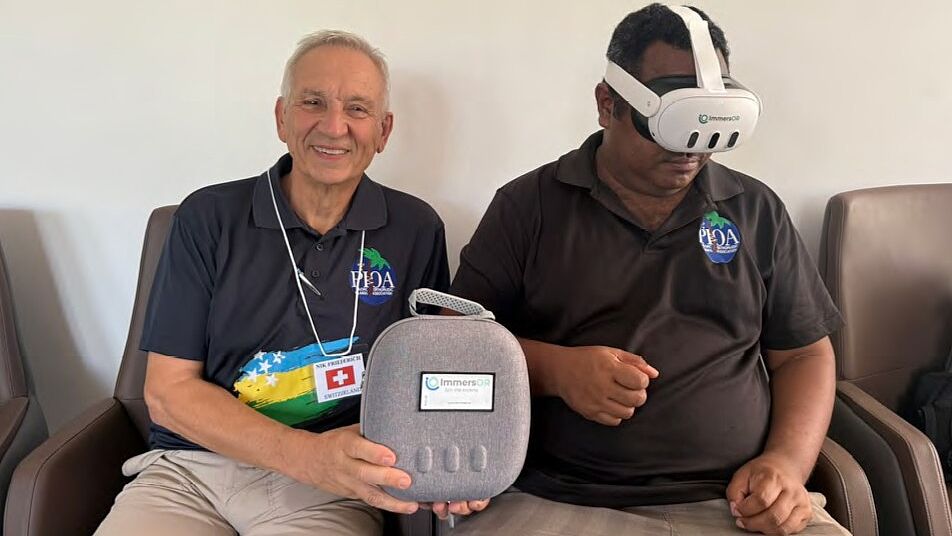
“Leaving skills, not scars. This is our approach: we want to provide young surgeons with practical orthopedic training where it is most needed,” says Prof. Emeritus Niklaus Friederich.
The orthopedic surgeon and Senior Medical Advisor to the Department recently contributed to this effort during an on-site training session organized by the Pacific Islands Orthopaedic Association (PIOA) in Honiara, Solomon Islands. Since its founding in 2012, PIOA has provided postgraduate surgical training in a region where access to specialized orthopedic education is limited.
The South Pacific region has long faced significant gaps in access to orthopedic care. Access to surgery across the Pacific Islands remains constrained by shortages of trained personnel, inadequate infrastructure, and limited maintenance capacity. With communities scattered across vast distances and limited transportation options, many trauma patients arrived for treatment late. Researchers estimate that 96% of the population still lacks reliable access to safe, timely surgery.
PIOA addresses this gap through a four-year, tuition-free “train-in-place” program. Trainees can pursue specialized orthopedic education while remaining at their home hospitals. To date, the program has trained 15 surgeons from six Pacific nations: the Solomon Islands, Fiji, Papua New Guinea, Samoa, Timor-Leste, and American Samoa.
Prof. Friederich has been an active member of the association since 2015, teaching trainees remotely each week and taking part in on-site sessions. From September 16 to 27, he and Brisbane-based surgeon Dr. Desmond Soares were joined by Dr. Claude Martin, representing AO Alliance, and medical staff from Australia and New Zealand for PIOA’s Introductory and Trauma Modules.
The curriculum combines remote instruction with in-person, hands-on training and the use of leapfrogging technologies such as virtual reality (VR) headsets. Trainees also document their clinical experience in individual logbooks, which provides a basis for local data collection and future research. With these innovative methods, the program aims to empower local stakeholders, reduce dependence on foreign specialists and support a more sustainable healthcare system.
The PIOA’s receives ongoing support from the AO Alliance Foundation as well as a foundation established by Hansjörg Wyss.