

Understanding the molecular mechanisms of angiogenesis
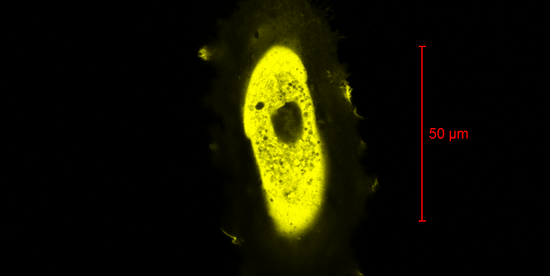
In collaboration with scientists at University of Leeds (UK), we have developed an experimental platform that will help improve our understanding of the molecular mechanisms that govern angiogenesis, i.e. vessel growth in the human body, in both physiological and pathological (e.g. tumor induced) conditions. To this end, we have developed and validated an experimental approach that combines microfluidics technologies with fluorescence imaging, and spectral analysis.
Our measurements suggest that the macroscopic outcomes (e.g., cell proliferation, cell migration, and eventually angiogenesis) of exposing vascular endothelial cells to extracellular growth factors appear to be frequency modulated, i.e., the rate at which pulses of biochemical responses emerge within the cell, rather than the amplitude of these pulses, regulates and controls further cellular processes. This counterintuitive finding, if found to be also valid in a more physiological in vivo context, might challenge the conventional view of dose-response relationship that underlies traditional, and unfortunately poorly performing anti-angiogenic treatment approaches to cancer. A first publication is currently in preparation.
For more information about this project, please contact Prof. Edgar Delgado-Eckert.
Dr. Sreenivasan Ponnambalam, Dr. Adam Odell, and Prof. Carmen Molina-Paris of University of Leeds, UK.