

Robust Multimodal Fiber Sensing for Flexible Medical Instruments
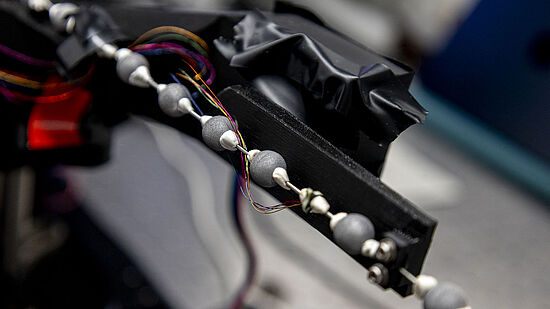
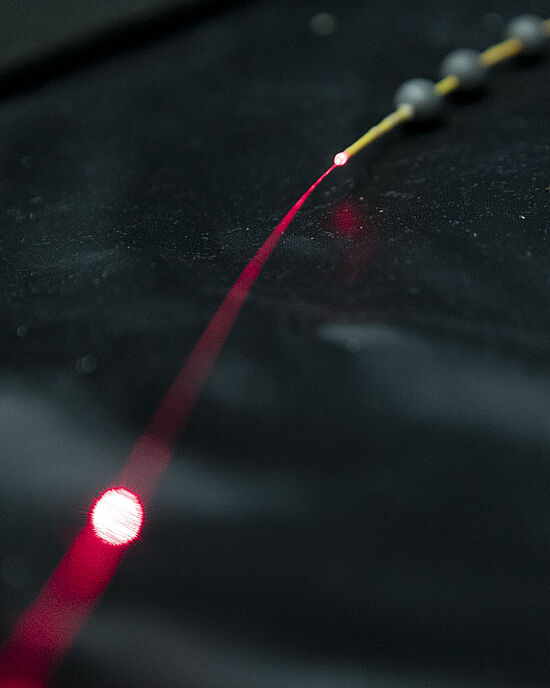
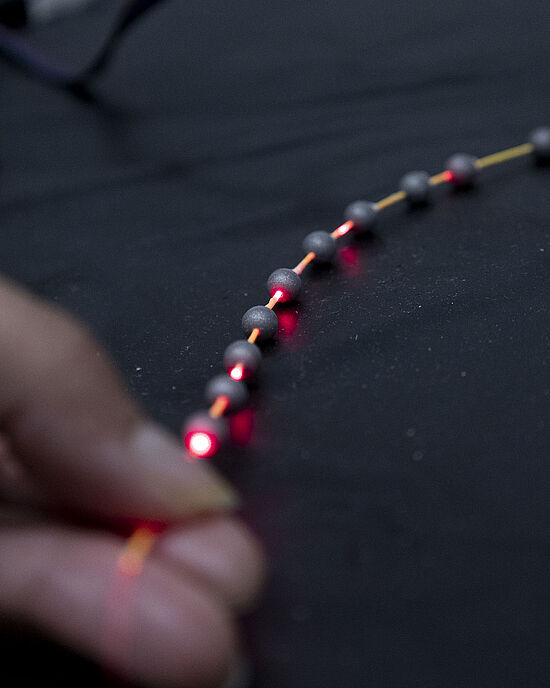
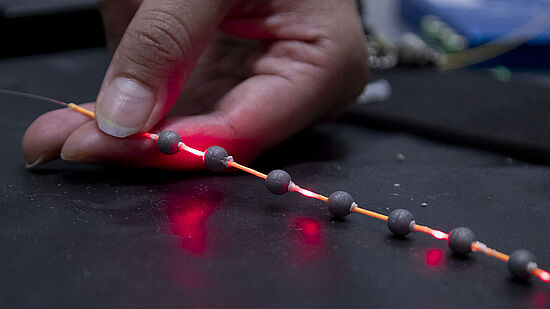
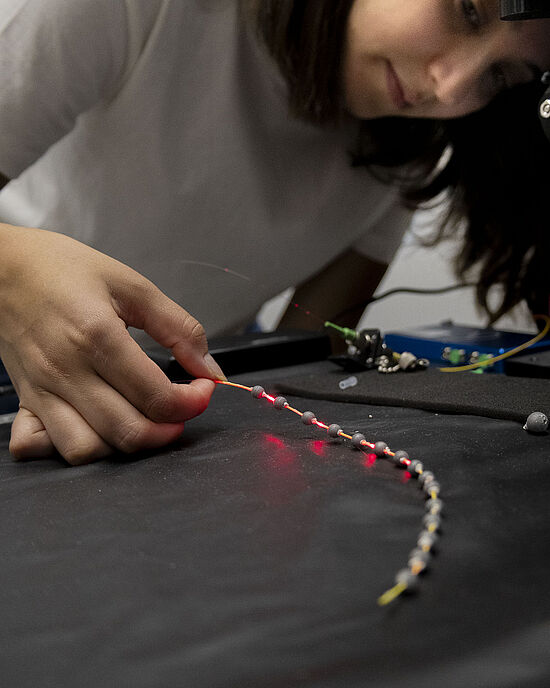
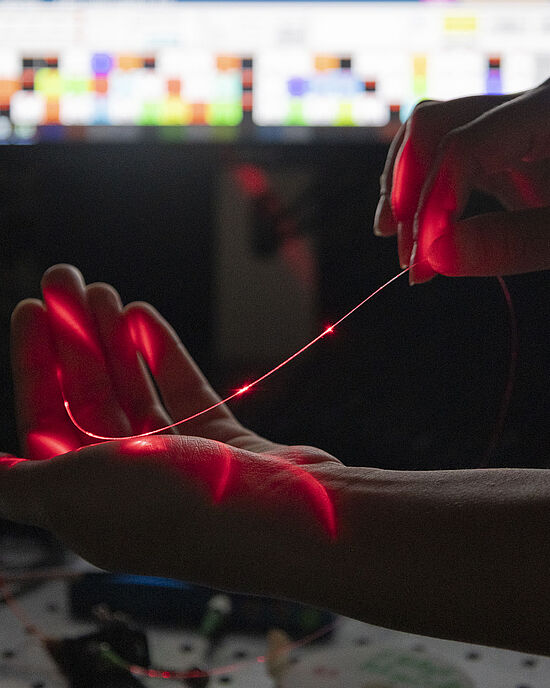
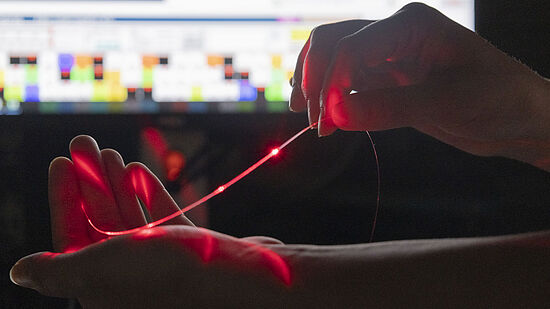
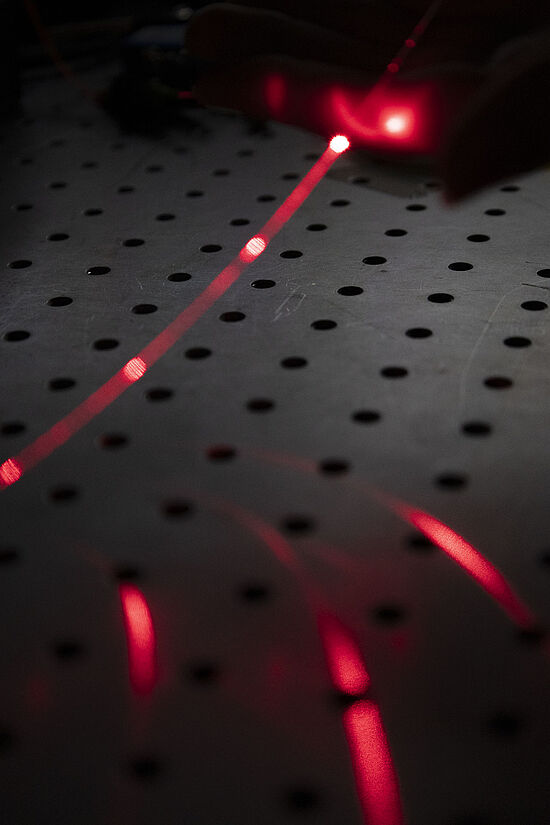
Knowing the real-time shape of flexible medical instruments, such as catheters and endoscopes, is important for safe navigation during minimally invasive surgeries. Fiber-optic sensors are a great choice for this because they are thin, flexible, biocompatible, and not affected by magnets or electrical equipment. While traditional commercial systems can be very accurate, they rely on expensive equipment and specialized fibers (such as multi-core fibers) that are difficult and costly to integrate. This project explores a more accessible, cost-effective alternative using an intensity-based system via eccentric Fiber Bragg Gratings (eFBGs) [Waltermann et al. (2018)] where bending alters the internal light distribution and changes the intensity of the reflected light.
The Challenge
Because eFBGs rely on light intensity rather than precise wavelength shifts, traditional mathematical models struggle to capture the complex relationship between bending and the resulting optical response. While deep learning can successfully handle these intensity measurements to improve shape reconstruction—as demonstrated by Manavi Roodsari et al. (2022, 2023, 2024)—its accuracy is easily disrupted by temperature changes, environmental factors, and variations in the light source or detector, leading to inconsistent results in real-world conditions.
Our Approach
To overcome these limitations, our project investigates the root causes of these perturbations and introduces a robust, multimodal framework. Eccentric Fiber Bragg Gratings are used to enable a simpler and lower-cost readout system, while advanced deep learning is specifically leveraged to address the limitations of traditional analytical models when handling intensity-based data. By fusing intensity and wavelength information, our system simultaneously estimates both shape and temperature to successfully decouple shape changes from thermal drift. Furthermore, we leverage advanced deep learning through representation learning—such as contrastive learning—to make models more resilient, ensuring consistent shape representations under varying measurement conditions. This highlights the need for methods that learn representations capable of generalizing across varied conditions without exhaustive labeled datasets. Finally, combining optical measurements with electromagnetic tracking provides complementary data that significantly boosts the accuracy and reliability of three-dimensional shape reconstruction.
Impact & Goals
The overarching goal of this project is to develop a compact, cost-effective, and clinically reliable multimodal sensing system that maintains high precision even under dynamic and changing conditions, ultimately improving safety in minimally invasive surgery.
S. Freund, DBE
S. Freund, DBE
S. Freund, DBE
S. Freund, DBE
S. Freund, DBE
S. Freund, DBE
S. Freund, DBE
S. Freund, DBE
For more information about this project, please contact Oumeymah Cherkaoui.

Oumeymah Cherkaoui

Sidaty El Hadramy

Philippe C. Cattin
Fraunhofer Heinrich Hertz Institute (HHI), Fiber Optical Sensor Systems Department, Goslar, Germany.
Werner Siemens Foundation