

/ Research
1.3 Million for the Second Phase of the RoLSSroice Project
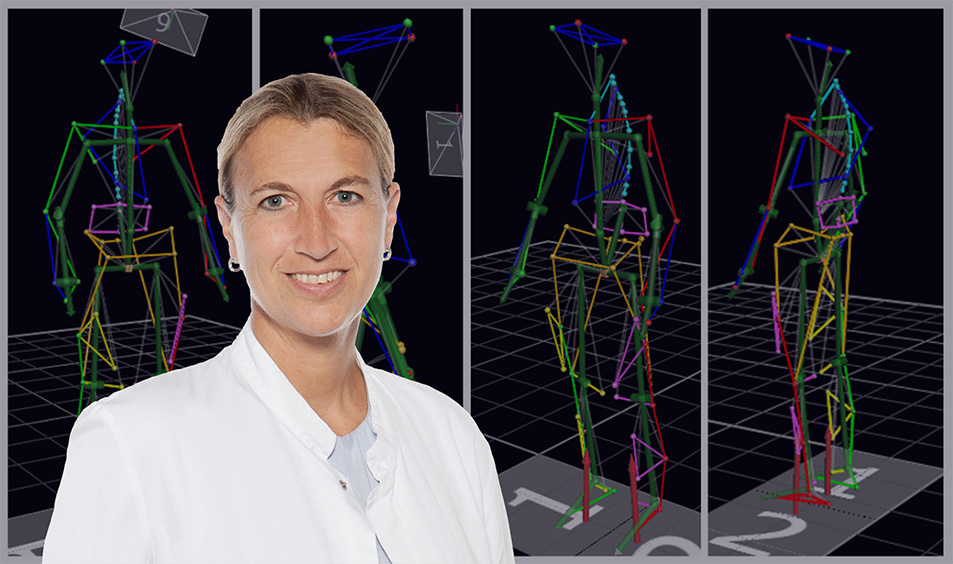
A research team led by Prof. Cordula Netzer has secured CHF 1.3 million in funding from the Swiss National Science Foundation (SNSF) for the second phase of the RoLSSroice project, an ambitious effort to better understand and predict outcomes after surgery for lumbar spinal stenosis. Building on the initial RoLSSroice study, which established a unique international database of 122 patients with comprehensive pre- and post-operative clinical, imaging, and biomechanical data, RoLSSroice II will extend the follow-up period to four years and introduce a carefully matched cohort of healthy older adults for comparison. This expanded dataset will enable the team to explore not only how patients recover over time but also why outcomes differ so widely between individuals.
Lumbar spinal stenosis—a narrowing of the spinal canal in the lower back—is the leading reason for back surgery in people over 65 and is associated typically with pain in the back and the legs, reduced mobility, and diminished quality of life. Although surgery aims to relieve pressure on the nerves and restore function, results remain variable: around 75% of patients report improvement after one year, and 60–70% maintain good outcomes at four years, yet more than 20% require revision surgery due to recurring symptoms or new complications. RoLSSroice II addresses this challenge by combining multiple layers of data, including patient-reported outcomes, high-resolution X-ray and CT imaging, motion capture–based analysis of spinal alignment and gait, and detailed assessments of muscle function and degeneration.
A key innovation of this project lies in its integration of advanced computational approaches. The researchers will develop subject-specific musculoskeletal and finite element models that link whole-body movement to internal spinal loading and tissue mechanics. By identifying the mechanical forces and structural factors that contribute to poor recovery, the team aims to create a predictive framework capable of distinguishing which patients are most likely to benefit from surgery and which may require tailored pre- and rehabilitation strategies or alternative treatments. Ultimately, this work seeks to support clinicians, therapists, and patients in making more informed decisions, improving long-term recovery, and reducing the need for costly repeat interventions.