

Dr. Anna Stoll awarded a Research Grant for Excellent Junior Researchers
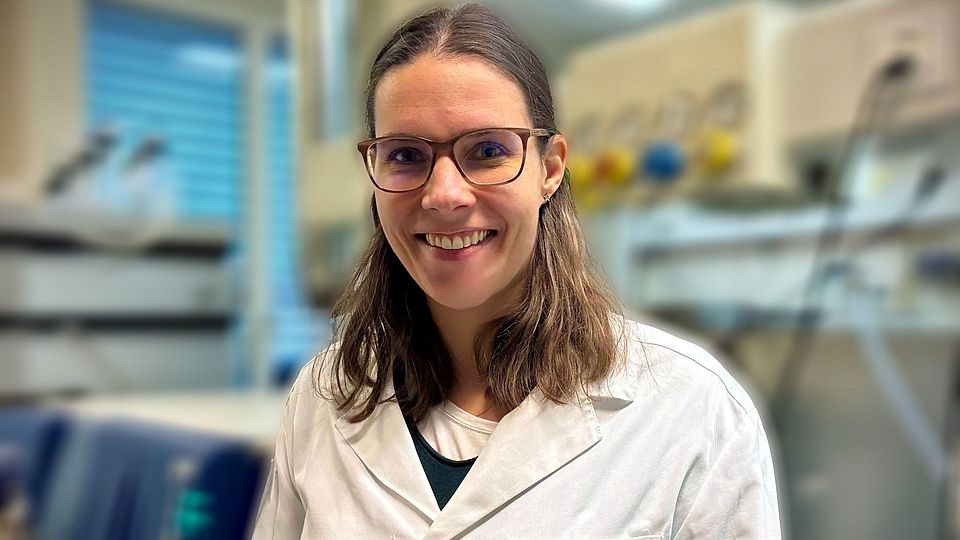
Forensic researcher, Dr. Anna Stoll, has been awarded CHF 80,000 to develop innovative blood-based markers that could make cannabis regulation and roadside testing fairer and more precise.
Dr. Anna Stoll, Postdoctoral Researcher at the Institute of Forensic Medicine of the University of Basel, has been awarded a grant from the Research Fund for Excellent Junior Researchers for her project “Investigations on phytochemicals in Cannabis sativa and their quantification in human blood.” The one-year grant, totaling CHF 80,000, supports her work on identifying novel biomarkers that can reliably indicate recent cannabis consumption.
The Research Fund for Excellent Junior Researchers is designed to help promising early-career scientists at the University of Basel build independent and innovative research profiles with strong societal relevance. Anna Stoll’s project exemplifies this mission by addressing a key limitation in current cannabis regulation, particularly in the context of traffic safety.
Starting in March 2026, Anna Stoll will pursue her goal of establishing more objective and scientifically grounded metrics for assessing cannabis use. Switzerland currently applies a zero-tolerance policy with a strict THC threshold. Because THC accumulates in the body, blood concentrations often show little correlation with actual driving impairment. As a result, individuals may be penalized for residual THC long after the psychoactive effects have subsided.
Rather than focusing on THC alone, Stoll’s research aims to identify phyto biomarkers that are more specific to recent cannabis use. By determining the time since last consumption, this new analytical approach seeks to distinguish acute impairment from lingering traces, a distinction that is crucial for fairer decision-making in roadside testing.
The project is embedded in the interdisciplinary CANBiome pilot study conducted at the Institute of Forensic Medicine, led by PD Dr. Urs Duthaler and sponsored by Prof. Dr. med. Eva Scheurer. Through systematic analysis of human blood samples, Anna Stoll’s work addresses an urgent gap in forensic toxicology and law enforcement. Beyond forensics, the identification of these biomarkers also holds promise for clinical pharmacology, offering improved monitoring of therapeutic cannabis use and new insights into metabolic pathways relevant for future drug development.