

New Laser Beam Shape Sets Record in Bone Surgery Research
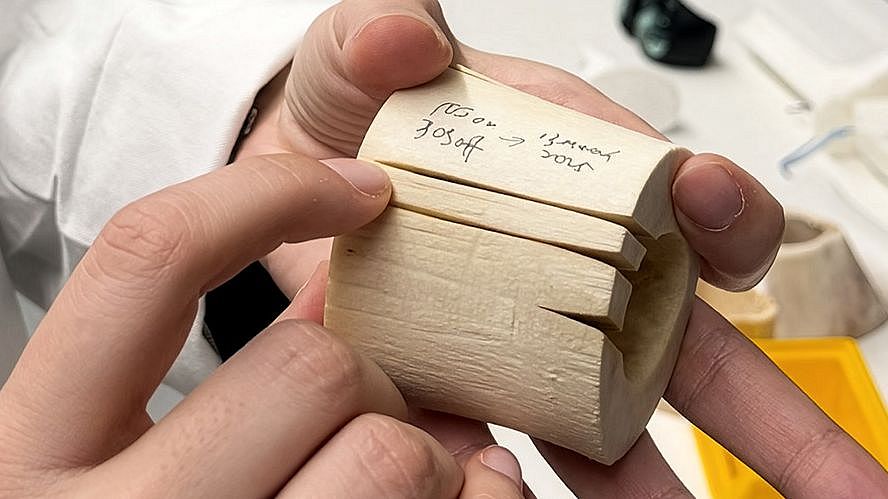
Researchers at the Centre for Intelligent Optics (CIO), led by Dr. Ferda Canbaz, have demonstrated that modifying a laser’s beam shape can significantly improve bone-cutting depth. By optimizing the beam profile, the team achieved cuts of up to 4.5 cm — substantially deeper than conventional laser beam shapes, which typically reach only 2 to 3 cm.
Rather than increasing laser power, the breakthrough was accomplished by reshaping the beam into a “top-hat” profile. This design distributes energy more uniformly across the target area, enabling deeper and more efficient cuts.
This work is part of the MIRACLEII project, funded by the Werner Siemens Foundation and supported by Innosuisse, which aims to advance laser bone surgery technology. Although the new method is close to the depth required for clinical use and offers many advantages over traditional mechanical tools, it is still too slow for practical use in surgery. Researchers are now working to further improve the depth and speed of cutting.
For more information:
UniNews by Angelika Jacobs
Original publication by Mingyi Lui et al.
CIO web page