

Technologies
The Core Facility Microcalorimetry uses a range of advanced thermal analysis technologies to study how materials and biological systems behave. Each method measures heat in a different way, allowing us to observe processes such as molecular interactions, material transitions, chemical reactions, and temperature patterns. Because heat is involved in nearly every physical, chemical, and biological change, these techniques provide powerful, non-invasive tools to better understand stability, performance, and behavior under real-world conditions.
Interested in our services?
Contact us for more details or a price estimation of our services.
S. Freund, DBE
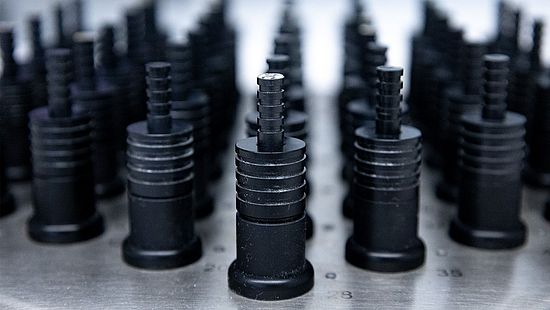
Isothermal microcalorimetry measures extremely small heat changes from a sample kept at a constant temperature. Because almost all physical, chemical, and biological processes involve some heat change, tracking this heat allows you to “watch” those processes in real time without needing to disturb the sample. It’s often used to study things like chemical reactions, how materials degrade over time, or how living cells grow, providing a sensitive, non-invasive window into what’s happening inside a system.
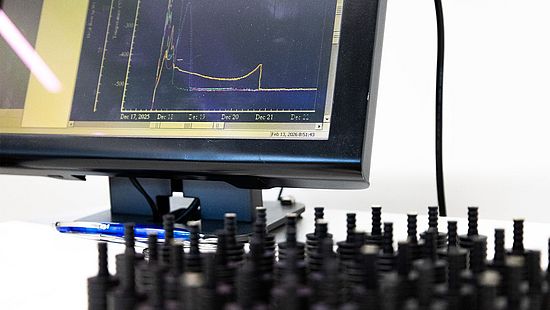
Isothermal titrationcalorimetry focuses specifically on the heat released or absorbed when two molecules interact, such as a drug binding to a protein. This allows to measure how strongly they bind and how much energy is involved without needing to modify or alter the molecules.
S. Freund, DBE
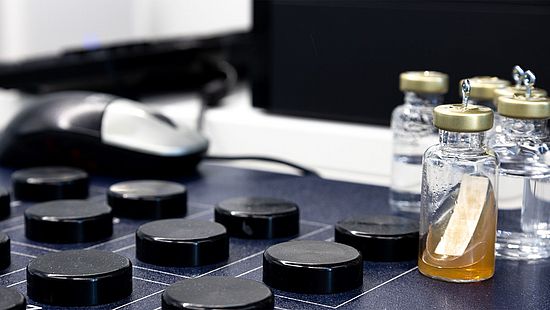
TAMIII and TAMIV - Isothermal microcalorimeters (brochure)
- Calorimeter Positions: 1-48
- Temperature Range: 15 - 90°C
- Thermostat Accuracy: < ± 0.1 °C
- Long Term Stability: < ± 100 μK/24h
- Sample Volume: 3mL
| specifications | Nanocalorimeter | Minicalorimeter 4ml | Microcalorimeter 20ml |
|---|---|---|---|
| sensitivity | < ± 10 nW | < ± 100 nW | < ± 100 nW |
| drift | < 20 nW/24h | < 200 nW/24 h | < 200 nW/24 h |
| accuracy | < 1% | < 5% | < 1% |
| precision | ± 100 nW | ± 200 nW | ± 100 nW |
S. Freund, DBE
TAM air - Isothermal microcalorimeter (brochure)
- Calorimeter Positions: 8
- Temperature Range: 20 - 90°C
- Thermostat Accuracy: ± 0.02°C
- Sample Volume: 20mL
- Limit of Detection: 4 μW
- Drift: < 40 μW / 24h
- Accuracy: < 5%
- Precision: ± 20 μW
- Short Term Noise: < ± 2.5 μW
S. Freund, DBE
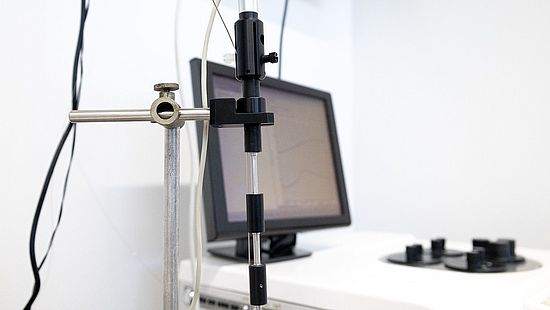
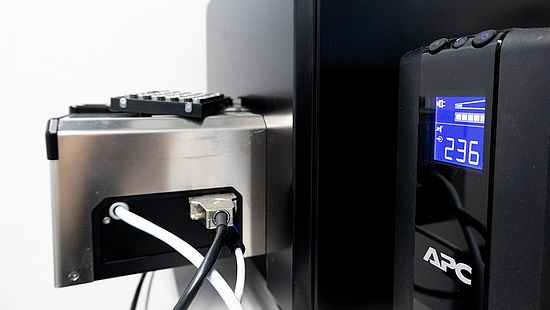
TAM ITC (brochure)
Titration unit available 4mL Hasteloy cell and 250μL syringe
S. Freund, DBE
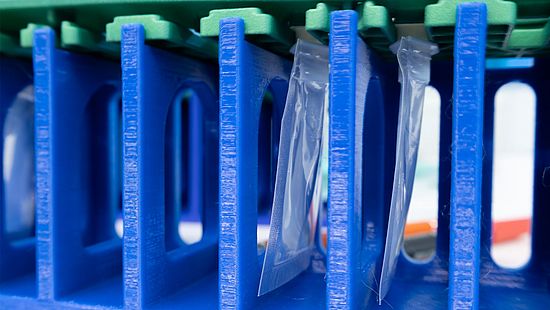
Symcel Calscreener - Isothermal microcalorimeter
- Calorimeter Positions: 32 + 16 references (48 total)
- Temperature Range: 32 – 42°C
- Sample Volume: 600μL maximum (300-400 recommended)
- Sensitivity: 50nW
- Limit of Detection: 100-200 nW (user experiments)
S. Freund, DBE
Calbact FAST4U Isothermal microcalorimeter
- Calorimeter positions: 6 PE-samples bags per measurement
- Temperature Range: 32°C – 42 °C (recommend 37°C)
- Sample Volume: 0.5 – 3 ml (recommended: 2 ml liquid, gel or powder)
- Limit of detection: 1 µW
- Drift: ± 0.2. µW/1h, < 5 µW/24h
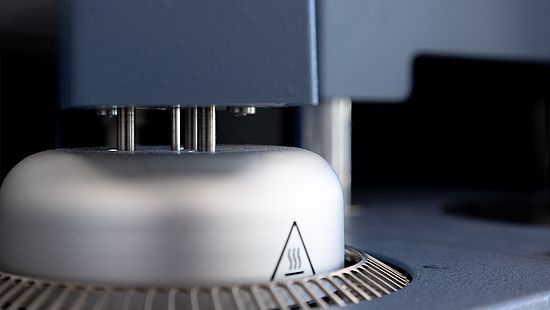
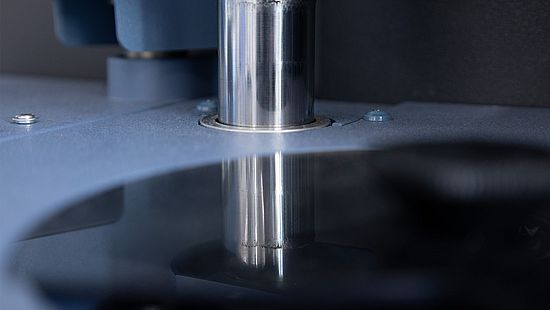
Differential scanning calorimetry looks at how a material’s heat flow changes as it is steadily heated or cooled, revealing transition events like melting or crystallization. This helps to understand properties like stability, purity, and how a material behaves under temperature changes, all without altering or damaging the sample.
S. Freund, DBE
DSC Q2000 TA instruments – Differential Scanning Calorimeters (brochure)
- Temperature Range: Ambient to 725°C
- With Cooling Accessories: -70 to 725°C
- Thermostat Accuracy: +/- 0.1°C
- Temperature Precision: +/- 0.01°C
- Calorimetric Reproducibility (indium metal): +/- 0.05%
- Calorimetric Precision (indium metal): +/- 0.05%
- Dynamic Measurement Range: >+/- 500 mW
- Baseline Curvature (Tzero; -50 to 300˚C): 10 μW
- Baseline Reproducibility with Tzero: +/- 10 μW
- Sensitivity: 0.2 μW
S. Freund, DBE
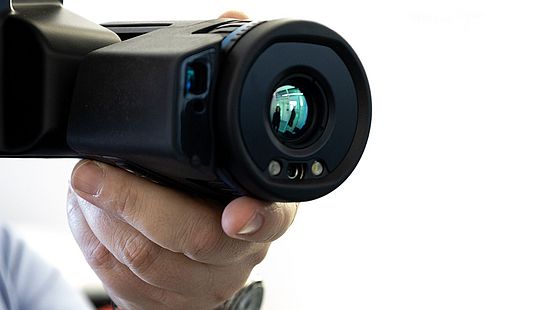
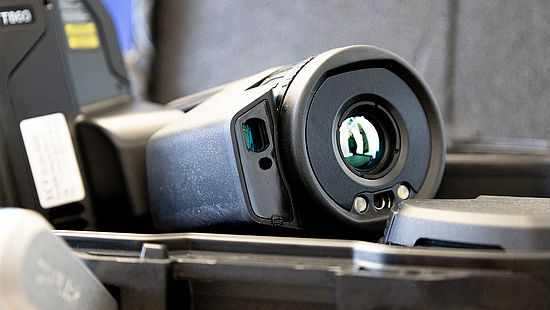
Thermography doesn’t measure heat flow inside a sample. Its cameras simply visualize surface temperatures by detecting infrared radiation. The camera converts this invisible heat into a visible image, showing warmer and cooler areas in different colours. This allows people to “see” temperature patterns across surfaces, which can help identify things like heat loss in buildings, overheating equipment, or temperature changes in the human body, all without touching or altering what’s being measured.
S. Freund, DBE
FLIR T860 Thermal Imaging Camera (brochure)
- IR Resolution: 640 × 480 pixels
- Thermal Sensitivity: <30 mK at 30°C (42° lens); <40 mK at 30°C (24° lens); <50 mK at 30°C (14° lens)
- Accuracy: ±2°C (±3.6°F) or ±2% of reading
- Field of view: 80° × 63°
- Digital Camera: 5 MP, with built-in LED photo/video lamp
- Display: 4", 640 x 480 pixel touchscreen